

Content marketing case studies: what worked, what is changing in 2026
Five enduring content marketing case studies (HubSpot, Walmart, Salesforce, Nike, ClickUp), with explicit lessons on what changed in the AI-search era.

Content marketing case studies stay useful when the tactics still work. Most 2024-vintage case study roundups quietly stopped mentioning what changed in 2025 and 2026: the buyer journey now runs through AI engines (ChatGPT, Perplexity, Claude, Gemini, Google AI Overviews) before any visitor clicks a Google blue link, and content that only optimises for classic search misses the citation layer that increasingly drives pipeline.
This guide covers five enduring content marketing case studies (HubSpot, Walmart, Salesforce, Nike, ClickUp) with their original lessons preserved, plus a 2026 update on each one: what they would do differently today, and what the new measurable signal looks like.
What makes a content marketing case study useful in 2026
A case study earns its keep when it answers four questions concretely:
- What was the actual problem? (Not "we needed more traffic". Specific buyer-stage gap.)
- What did the team ship? (Tactics + content structure + tools, named.)
- What was the measurable outcome? (Real numbers, not "engagement increased".)
- What changed about this in the AI-search era? (Critical for any 2024 or earlier example. Most pre-2025 case studies have a meaningful 2026 update.)
The five case studies below carry their original lessons (still valid) and the 2026 update (what would change today).
1. HubSpot: educational content compounds into category ownership
Original problem (2010s-2020s): HubSpot was a software vendor whose customers could only succeed with inbound marketing if they understood inbound marketing as a discipline first. The market itself needed teaching.
What they shipped: The HubSpot blog, expanded into podcasts, video, free certifications (HubSpot Academy), newsletters, original research reports, and a permanently free CRM. Volume + depth + breadth across every format their buyer used.
The outcome: HubSpot became synonymous with "inbound marketing" as a category. Organic traffic carries the majority of pipeline 15 years after launch. The marketing function literally owns the category name.
2026 update: HubSpot is now one of the most-cited brands inside ChatGPT, Perplexity, and Gemini when users ask any inbound-marketing question. That citation rate did not happen because HubSpot did AEO; it happened because the volume, depth, and reference-graph density of the HubSpot content corpus is what AI engines lift from. The lesson translates: content depth over years compounds in the AI-search era exactly as it compounded in the classic-search era. The mechanism shifted (citation, not click) but the input is the same.
2. Walmart: persona-specific content beats broad content
Original problem (mid-2010s): Walmart's general content was readable but not differentiated. The team could not measure ROI against specific customer segments because the content was written for "everyone".
What they shipped: A dedicated content portal targeting mothers who wanted to save money and time at home. Editorial tone shifted to be approachable, less corporate. Partnered with Contently to scale editorial production while keeping voice consistent.
The outcome: Customers who interacted with editorial content placed orders 7% larger than visitors who shopped directly. Exit rate dropped, engagement climbed.
2026 update: Persona-specific content is now table-stakes; the differentiator is persona-specific prompts. The buyer no longer types "save money on groceries" into Google. She asks Perplexity "I'm a working mom, what is the cheapest way to feed a family of four with under 30 minutes of prep?" Walmart-style persona content has to be restructured so AI engines lift the right passages into the synthesised answer. Same content, structurally re-shipped with answer blocks, question-shaped H2s, and recipe-level schema. See Answer Engine Optimization 101 for the structural pattern.
3. ClickUp: product-led content beats paid acquisition
Original problem (2020-2022): ClickUp had to scale audience and brand awareness without burning capital on paid ads, in a project-management category already saturated by Asana, Monday, and Notion.
What they shipped: Product-led content marketing where every blog post, comparison page, and tutorial demonstrated the actual ClickUp product solving a specific buyer problem. Aggressive SEO targeting of "best [project tool] for [vertical]" queries, paired with vertical landing pages.
The outcome: Organic traffic became the largest pipeline channel. ClickUp grew from low-millions to multi-billion valuation largely on the back of this content engine.
2026 update: "Best X for Y" content still works because AI engines lift comparison content into "X vs Y" prompts. But the 2026 version of the ClickUp pattern adds AI-citation tracking: which of the comparison pages is ChatGPT actually citing when users ask "what is the best project management tool for marketing agencies?" Brands that measure this rebalance their comparison-page investment based on actual AI-citation data, not just Google rank. Third-party citation trackers or a fixed panel of buyer prompts, checked weekly, close this measurement loop.
4. Salesforce: original research as the credibility flywheel
Original problem (late 2010s): Salesforce wanted to be perceived as the authoritative voice on enterprise sales and customer relationship strategy, not just a CRM vendor. Generic blog content was not enough.
What they shipped: Original benchmark reports (State of Sales, State of Marketing, State of Service), in-depth industry research, live-streamed events, executive-led LinkedIn content, and signature campaigns ("Salesforce Live"). Annual research dropped on a schedule the industry started building around.
The outcome: 20% rise in report downloads year-over-year, significant LinkedIn interaction lift, category authority that competitors still cannot dislodge.
2026 update: Original research is the single highest-Information-Gain content format an AI engine can find. Salesforce's annual reports get cited inside ChatGPT, Perplexity, and Gemini every time a user asks any sales-or-CRM benchmark question, even though most users have never read the source document. In 2026, original research is the most efficient AEO move a brand can make. One report, written once, gets cited for years. See Information Gain Vector Audit for how to measure whether your content carries enough novelty to be cited.
5. Nike: emotional brand storytelling at category-defining scale
Original problem (every decade since 1988): Nike competes with Adidas, Puma, Reebok, and dozens of niche brands on physical product features, but differentiation has to come from somewhere harder for competitors to copy.
What they shipped: Emotional storytelling across every channel: Just Do It, Find Your Greatness, Dream Crazy. Athlete partnerships that doubled as content engines (Jordan, LeBron, Serena, Colin Kaepernick). Cultural-moment campaigns that compounded across decades.
The outcome: Nike online sales grew 36% during the most successful campaign cycles. Brand-affinity scores carried through even controversial moments.
2026 update: Emotional storytelling still works for B2C, but the structural mechanic that makes it compound has changed. Nike's brand mentions across the open web (Wikipedia, news, forums, social) are what AI engines parse into the Nike entity graph. The brand-affinity story is now also an AI-citation story: when a Gen Z buyer asks Perplexity "what running shoes feel like wearing nothing?", Nike's entity-graph density across the open web is the reason its products appear in the AI's answer. The 2026 implication: brand storytelling and entity reinforcement are now the same workstream.
Frequently asked questions
1) What is a content marketing case study?
A content marketing case study is a structured account of a specific content marketing program: the buyer-stage problem, the content tactics deployed, the measurable outcome, and (in the AI-search era) the citation signal across AI engines. The best case studies name real numbers, real tools, and real time windows. Generic "engagement went up" content is not a case study.
2) Which content marketing case study is most relevant for SaaS companies in 2026?
The HubSpot and ClickUp examples both translate cleanly to SaaS: long-term content depth compounds into category ownership (HubSpot) and product-led comparison content drives organic acquisition (ClickUp). For 2026 specifically, layer AEO and GEO patterns on top: write answer blocks, ship schema, measure AI citation rate alongside Google rank.
3) How do you measure success in a content marketing case study?
Five signals worth tracking:
- Organic traffic from Google (still matters).
- AI citation rate across ChatGPT, Perplexity, Gemini, Claude, Bing Chat (new in 2026).
- AI-citation traffic (visitors who landed on your site from an AI engine referral).
- Conversion rate per source (AI-cited visitors typically convert 3 to 4 times higher than cold Google).
- Brand-mention rate across the open web (Wikipedia, news, Reddit, forums).
Track all five side by side so you can see which content moves which signal.
4) Can a small brand replicate the HubSpot or Salesforce case study without their budget?
Yes, with a focused version of the same pattern: pick one buyer-stage problem, ship deep content on it (10 to 20 anchor pieces), publish one piece of original research per quarter, and measure citation rate. The HubSpot pattern works at $50k/year content investment and at $5M/year content investment; only the volume changes.
5) What is the biggest difference between a 2024 content marketing case study and a 2026 one?
The measurement layer. 2024 case studies counted clicks, time-on-page, and conversion rate. 2026 case studies add AI citation rate across ChatGPT, Perplexity, and Gemini, and AI-attributed pipeline conversion. The tactics overlap significantly; the signal you measure changed.
Want this pattern run for your brand?
The patterns in these five case studies shape our Digital Marketing and AEO and GEO work. If you want help building the content engine, with AI-citation tracking and the full Brand Hub plus Pillar-Cluster-Supporting framework, contact us via /contact. Or start with the free AI readiness check.
Key takeaways
- HubSpot: depth-of-content compounds across decades, mechanism shifted from click to AI citation, input is the same.
- Walmart: persona-specific content still works, but now needs prompt-shaped H2s for AI engines to lift the right passages.
- ClickUp: product-led comparison content earns AI citations on "X vs Y" prompts. Measure citation rate, not just Google rank.
- Salesforce: original research is the highest-Information-Gain format AI engines find. Single most-efficient AEO move.
- Nike: brand storytelling and entity reinforcement are now the same workstream. Open-web entity-graph density is what AI engines parse.
Questions people ask about this
Short answers to the questions that come up most on this topic.
- A content marketing case study examines how successful companies use content to attract interest, build brand loyalty and increase conversion rates. They offer best practices for creating effective strategies.
- Writing proper and relevant content can help your company become known as a thought leader. By Providing your audience with reliable and expected information, you will continue to gain their trust. They will return to your website in search of more beneficial material.
- Companies use content marketing to attract leads, engage audiences and build brand authority by creating informative, engaging content tailored to their target audience’s needs.
Keep reading
Related articles.
More on the same thread, picked by tag and category, not chronology.
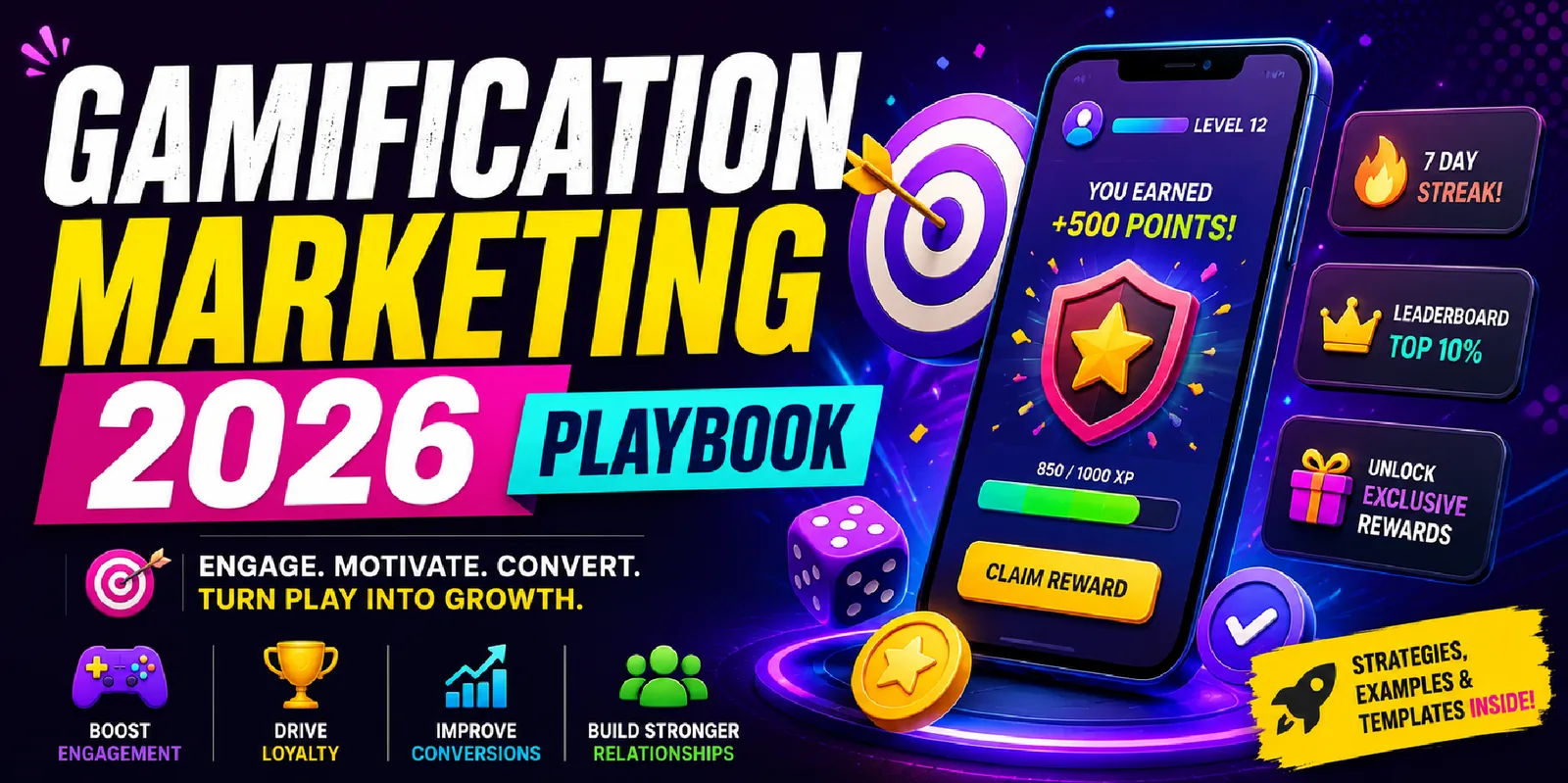
Gamification Marketing 2026 Playbook
Seven gamification mechanics that move real marketing KPIs in 2026. Quizzes, spin wheels, streaks, tier programs, onboarding quests, two-sided referrals, and learning sims.
Muhammad Zeeshan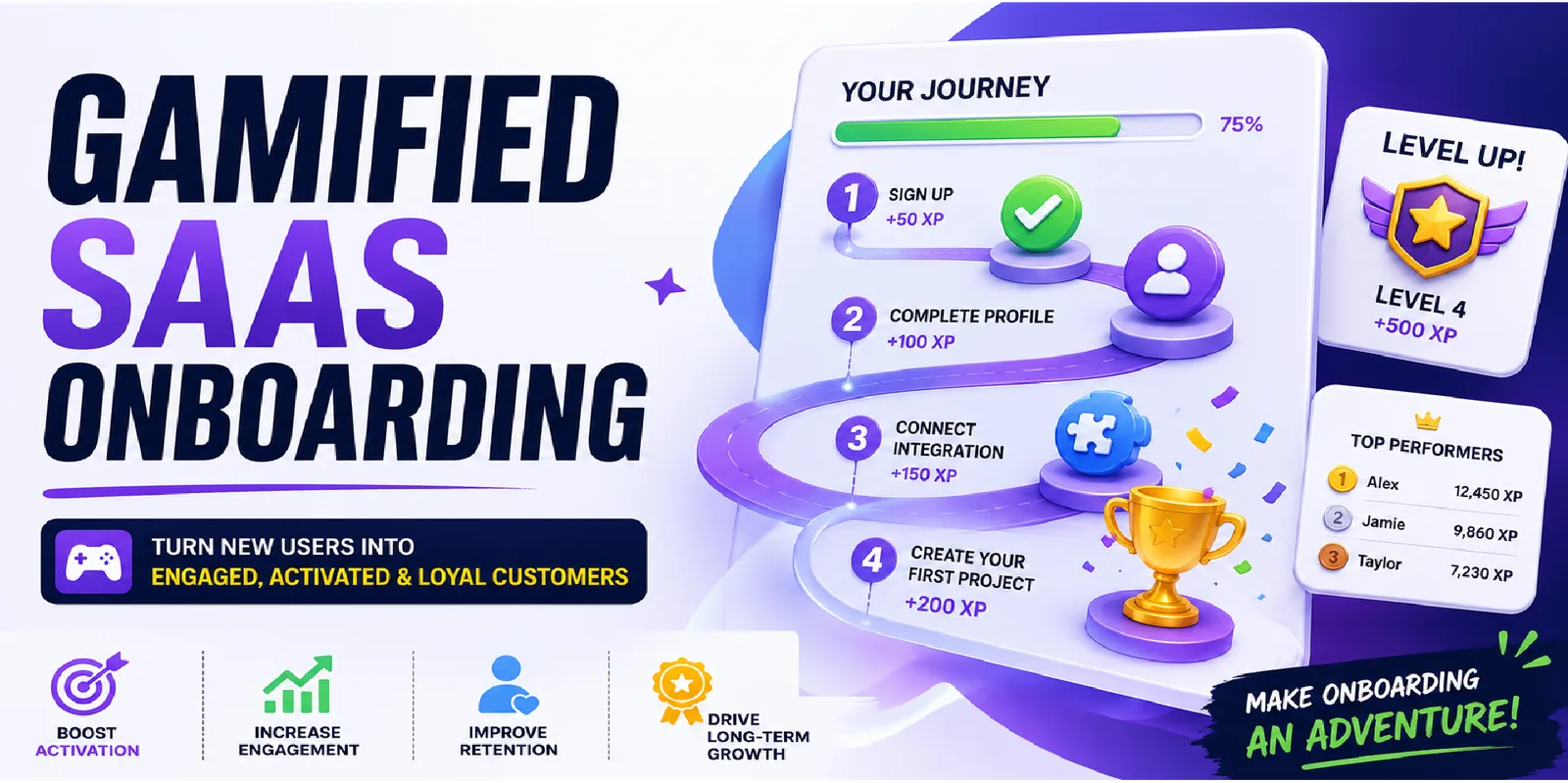
Gamified SaaS Onboarding
The implementation guide. Why gamified onboarding works (the boring research-backed part), the four mechanics that move SaaS activation, and the five-phase plan for designing the quest.
Muhammad Zeeshan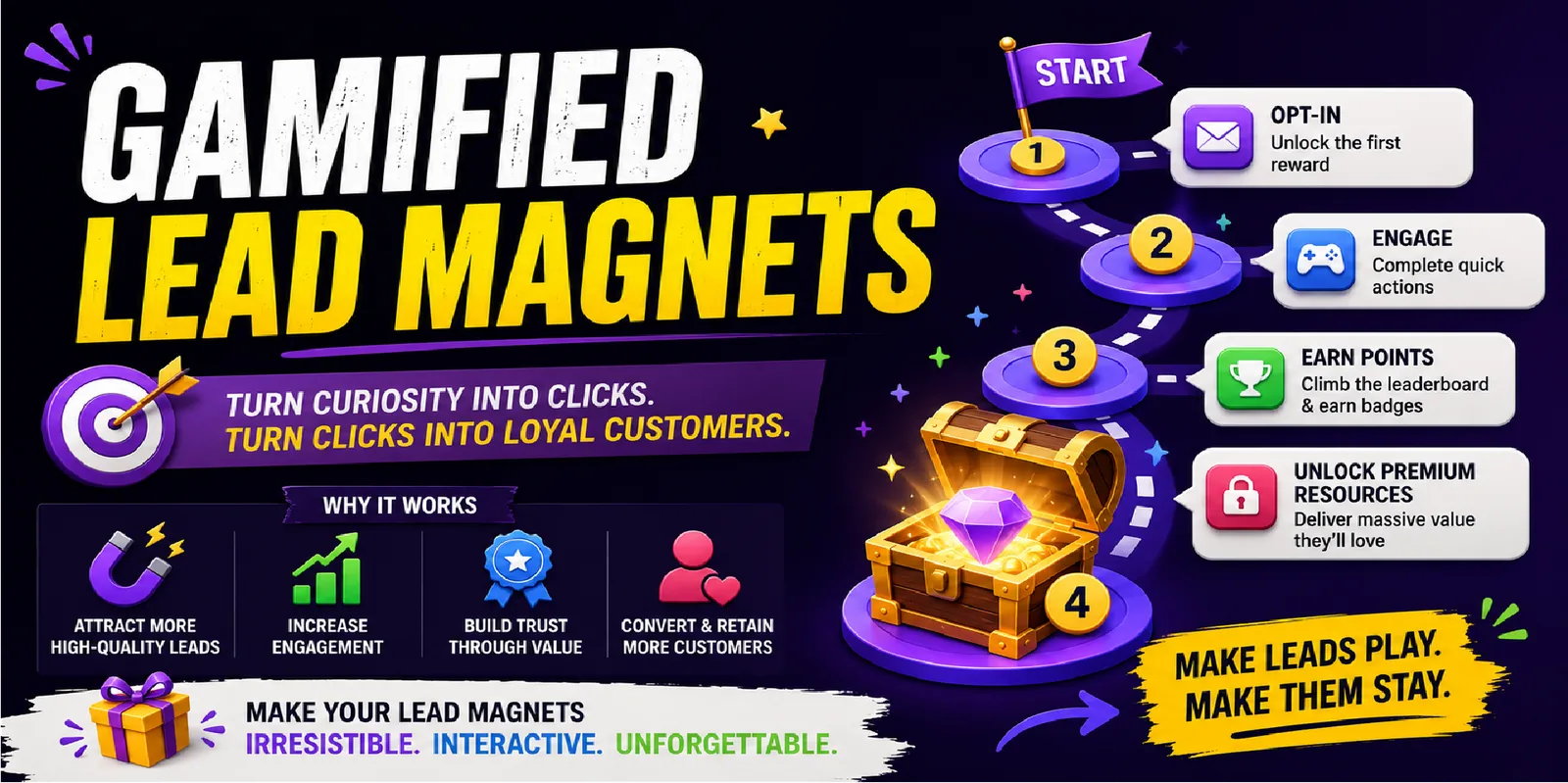
Gamified Lead Magnets
Static forms convert at 2 to 4 percent on cold traffic. Quizzes, spin wheels, and scratch reveals convert at 12 to 38 percent. The short, sharable version: when each mechanic wins, when it loses, and the reward economy that determines lead quality.
Muhammad ZeeshanKeep exploring
From reading to doing.
See how we can help, look up a term, or check your own site with a free tool.
Put the guide to work.
Websites, Webflow, WordPress, Shopify, Framer, SEO, AEO and GEO, AI automation, and ongoing support.
See servicesPlain-language definitions.
SEO, AEO, GEO, website, and AI growth terms explained without the jargon.
Open the glossaryCheck and fix it yourself.
Free tools for SEO, AI search, and website planning, including an llms.txt generator and a schema builder.
Try the toolsReady when you are
Want help with E-commerce Development?
Send us your website and your goal. We will tell you honestly what should be done first, whether or not we work together.